Training and assessment platform for acute care nurses in infection prevention

Training and assessment platform for acute care nurses in infection prevention

App screens
App screens

My Role

My Role

As the Lead Product Designer, I owned the end-to-end UX/UI design of both the VR application and the web platform.


My work in VR focused on UX/UI and interaction design, object texturing, and visual consistency, translating complex clinical workflows into intuitive VR interactions.


For the web platform, I led the UX/UI design, core user flows, and the design of performance reports.


This project was developed in close collaboration with developers, product managers, and clinical consultants.

BACKGROUND

The COVID-19 pandemic exposed gaps in infection prevention and control (IPC) practices across U.S. healthcare.

The COVID-19 pandemic exposed gaps in infection prevention practices (IPC) across U.S. healthcare.

Effective IPC is critical to preventing hospital acquiered infections and protecting both patients and healthcare workers.

IPC Stops the spread of Infection, illness, death and protecting patient and healthcare workers.

Major impact on patient

Major impact on patient

Major impact on patient

100K

deaths annually

100K

deaths annually

1 in 31

patients affected

1 in 31

patients affected

1-2M

infections annually

1-2M

infections annually

Heavy costs for the system

Heavy costs for the system

Heavy costs for the system

$40B+ annually

economic burden

$40B+ annually

economic burden

Extended stays and readmissions

Extended stays and readmissions

Penalties and compliance

Penalties and compliance

THE PROBLEM STATEMENT

THE PROBLEM STATEMENT

IPC training relies on physical simulation spaces, making

it hard to assess, scale, and adapt across a variety of

healthcare settings.

IPC training relies on physical simulation spaces, making it hard to assess, scale, and adapt across a variety of healthcare settings.

potential users

potential users

Nurses

Healthcare workers

IPC specialists

Hospital Administrators

Pain Points & Implications

Pain Points & Implications

Inconsistent training methods

->

Increased risk of infections

Limited access to hands on practice

->

Low confidence in high risk situations

Cognitive burden in clinical work

->

Ineffective training outcomes

No clear feedback or assessment

->

Wasted time and resources

Physical simulations are not scalable

->

Elevated operational costs

Solution Overview

Solution Overview

Design Challenges

Diverse target audience

Diverse target audience

Acute care nurses aged 18 to 65 with no VR background

Acute care nurses aged 18 to 65 with no VR background

Cross platform journey

Cross platform journey

From web entry to VR practice and back to the web

From web entry to VR practice and back to the web

Independent use

Independent use

Designed for self guided learning without external support

Designed for self guided learning without external support

Research and discovery

Research and discovery

Market research

Market research

Conducted ongoing cross industry analysis across healthcare, gaming, education, and corporate training.

Led to prioritizing hand tracking over traditional controllers, making germ transmission visible and interactions clearer.

Led to prioritizing hand tracking over traditional controllers, making germ transmission visible and interactions clearer.

Task analysis

Task analysis

Observed and mapped real-world IPC workflows and simulation practices to understand how tasks are performed in clinical settings.

Highlighted the need to balance a linear flow with the option to shift into a sandbox approach.

Highlighted the need to balance a linear flow with the option to shift into a sandbox approach.

Usability testing 

Usability testing 

Conducted iterative usability testing including site visits, "think aloud" sessions, and analysis of recorded user interactions with first time VR users.

Revealed hesitation, spatial uncertainty, and missed interaction cues, leading to clearer guidance and simplified navigation.

Revealed hesitation, spatial uncertainty, and missed interaction cues, leading to clearer guidance and simplified navigation.

Surveys 

Surveys 

Collected pre and post session surveys to evaluate perception, confidence levels, and behavioral impact.
Indicated increased awareness of infection transmission and stronger intent to change behavior.
“Seeing the contamination made me rethink how I work.”

Indicated increased awareness of infection transmission and stronger intent to change behavior.
“Seeing the contamination made me rethink how I work.”

Design Approach

Design Approach

See

See

how germs spread

how germs spread

Practice

Practice

infection prevention behaviors

infection prevention behaviors

improve

Improve

by tracking results on the web portal

by tracking results on the web portal

Intuitive & Clear Use

Intuitive & Clear Use

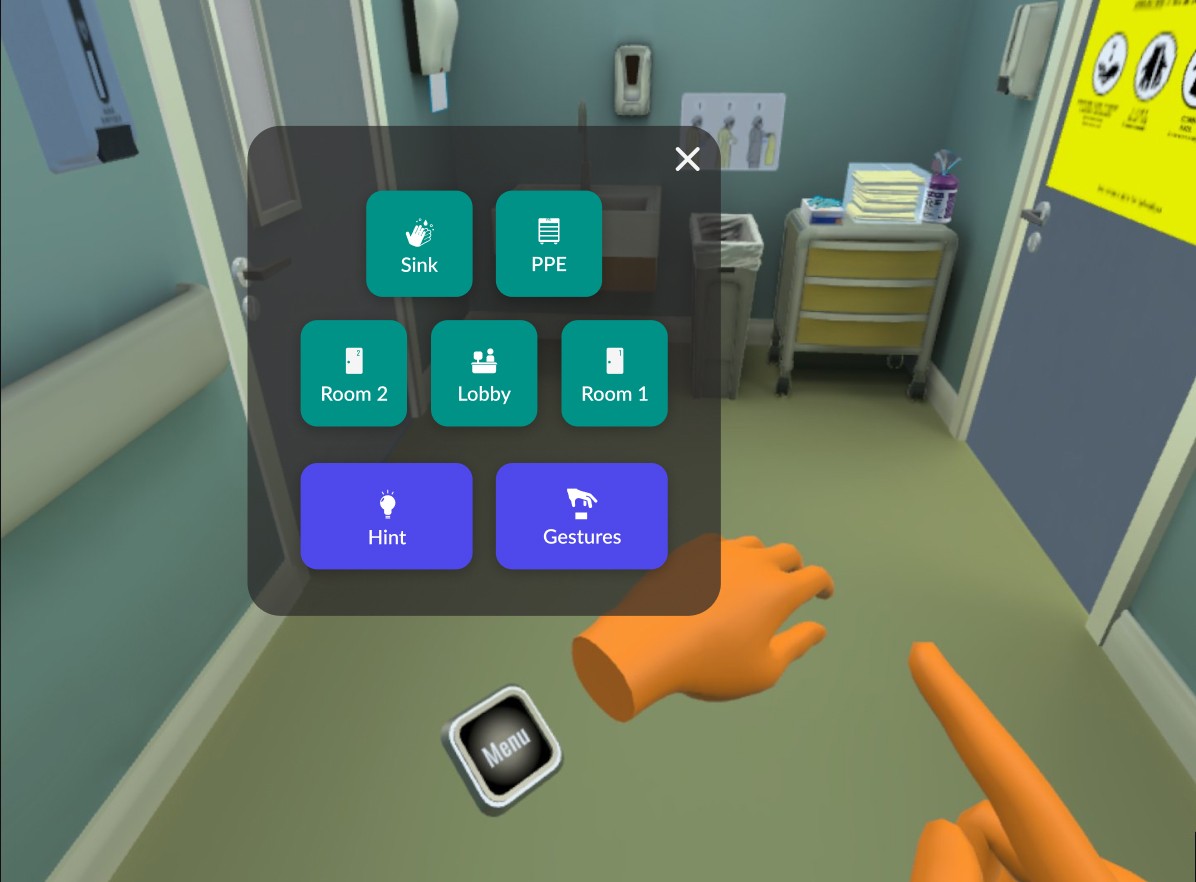
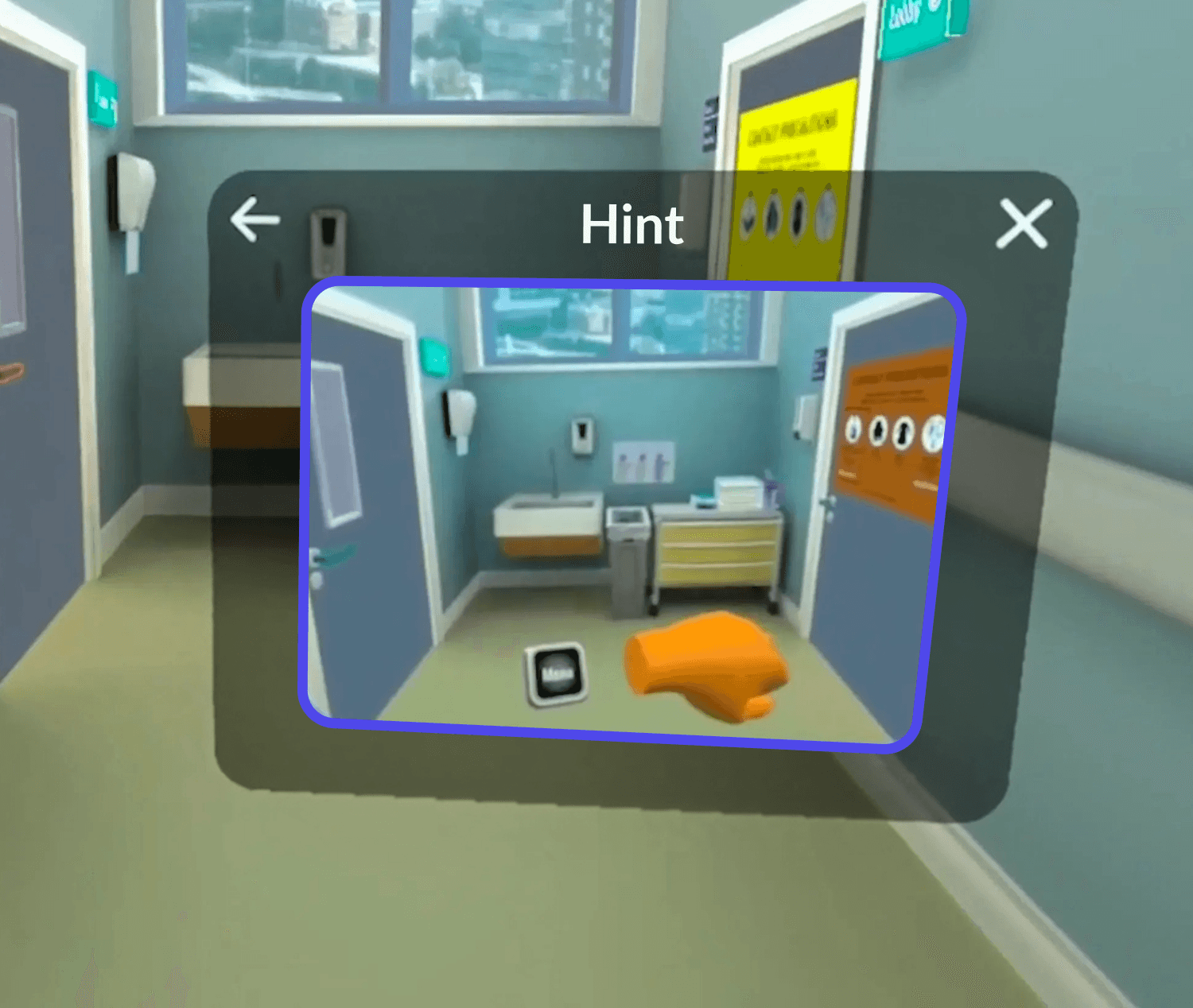
To support independent use, key actions were consolidated into a single wrist-based entry point, positioned like a watch.


This placement required no visual search, stayed consistently within reach, and followed a real world convention users already understood.


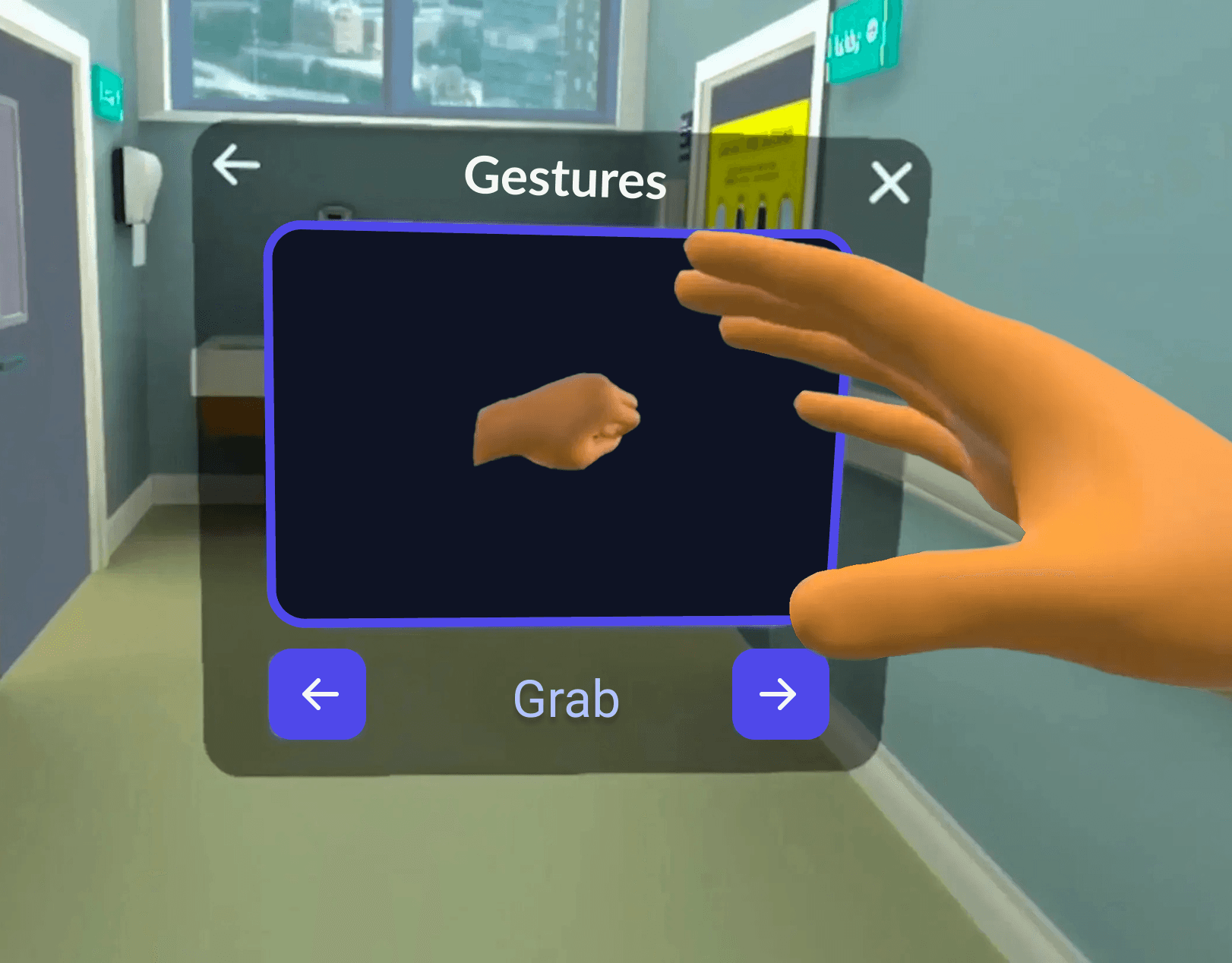
The interface brought together navigation, contextual hints, gesture guidance, and learning modes under one structured menu.


Centralizing access in one predictable location allowed users to focus on the task rather than on operating the system.

Rethinking Movement

Rethinking Movement

Because users could not physically walk between areas, navigation had to be safe, predictable, and time efficient.


Early gesture-based teleportation required precision and led to repeated failed attempts, especially for users with limited VR experience. Navigation was therefore reduced to a single, predictable action: press → open menu → select destination.


Users moved between locations reliably, shortening transitions and preserving workflow continuity.

Because users could not physically walk between areas, navigation had to be safe, predictable, and time efficient.


Early gesture based teleportation required precision and led to repeated failed attempts, especially for users with limited VR experience. Navigation was therefore reduced to a single, predictable action: press → open menu → select destination.


Users transitioned between locations with minimal hesitation and no need for spatial precision. This reduced transition time, and allowed nurses to continue tasks without disruption.

Immediate, Realtime Feedback

Immediate, Realtime Feedback

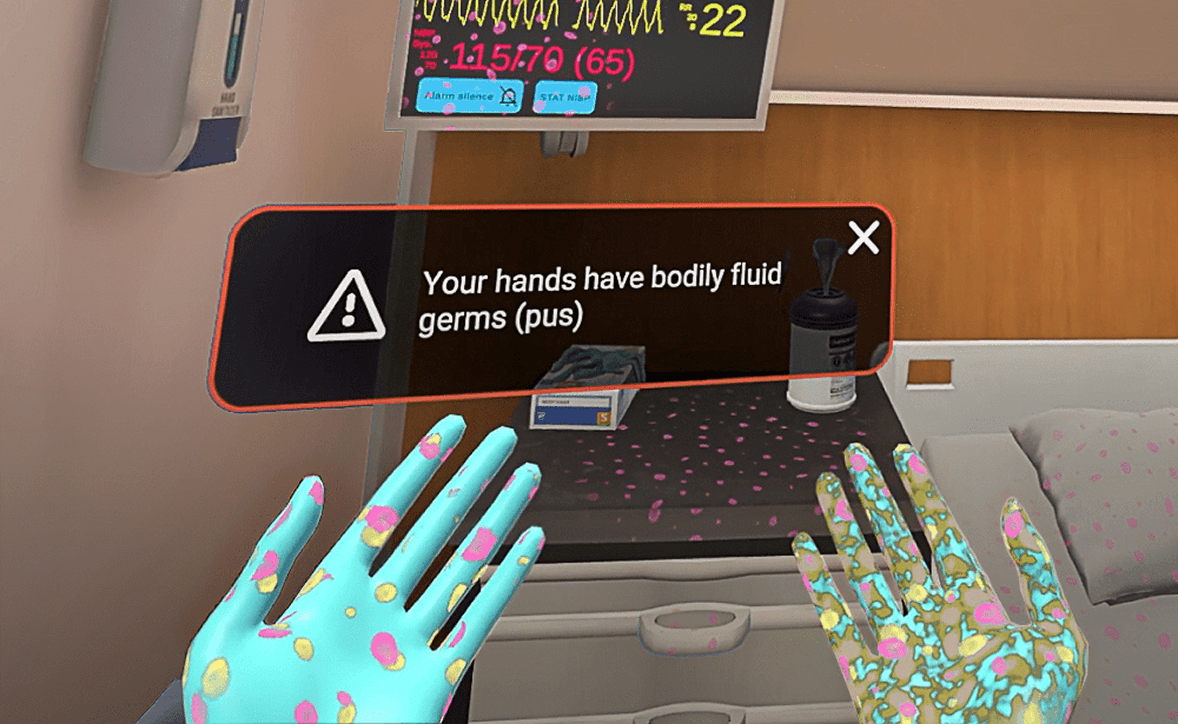
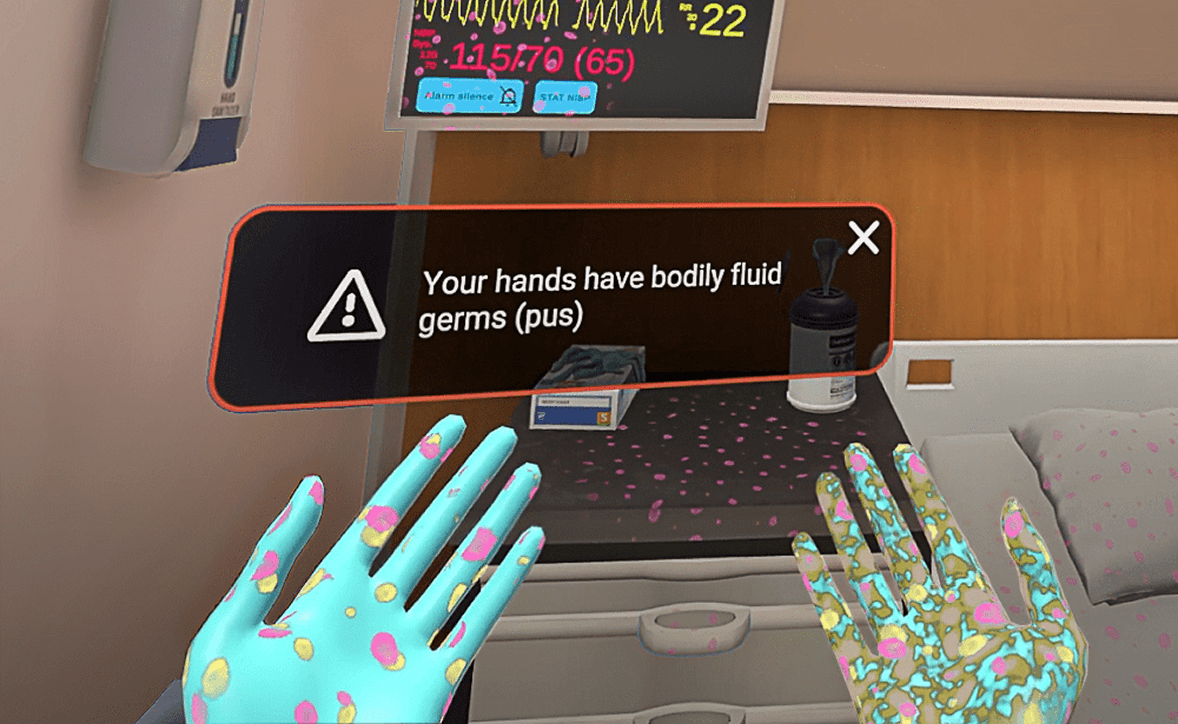
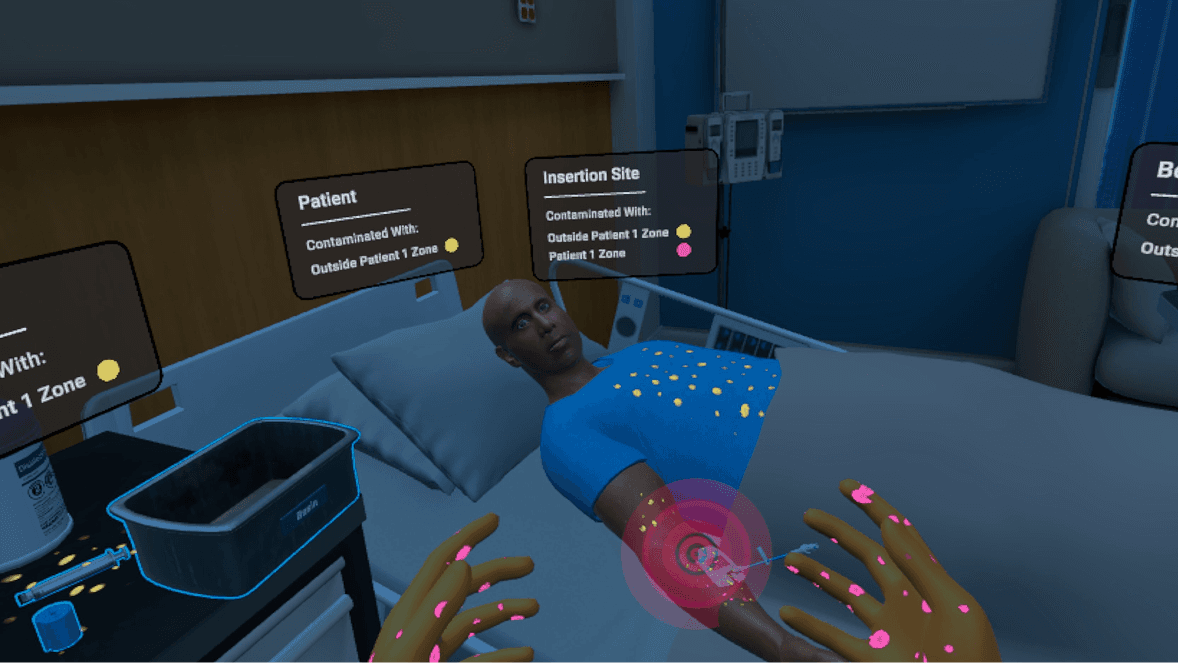
Cues highlight contamination risks during the experience.

Post-task review shows where contamination transfer occurred, supporting assessment focused learning.
Connecting Web and vr

Connecting Web and vr

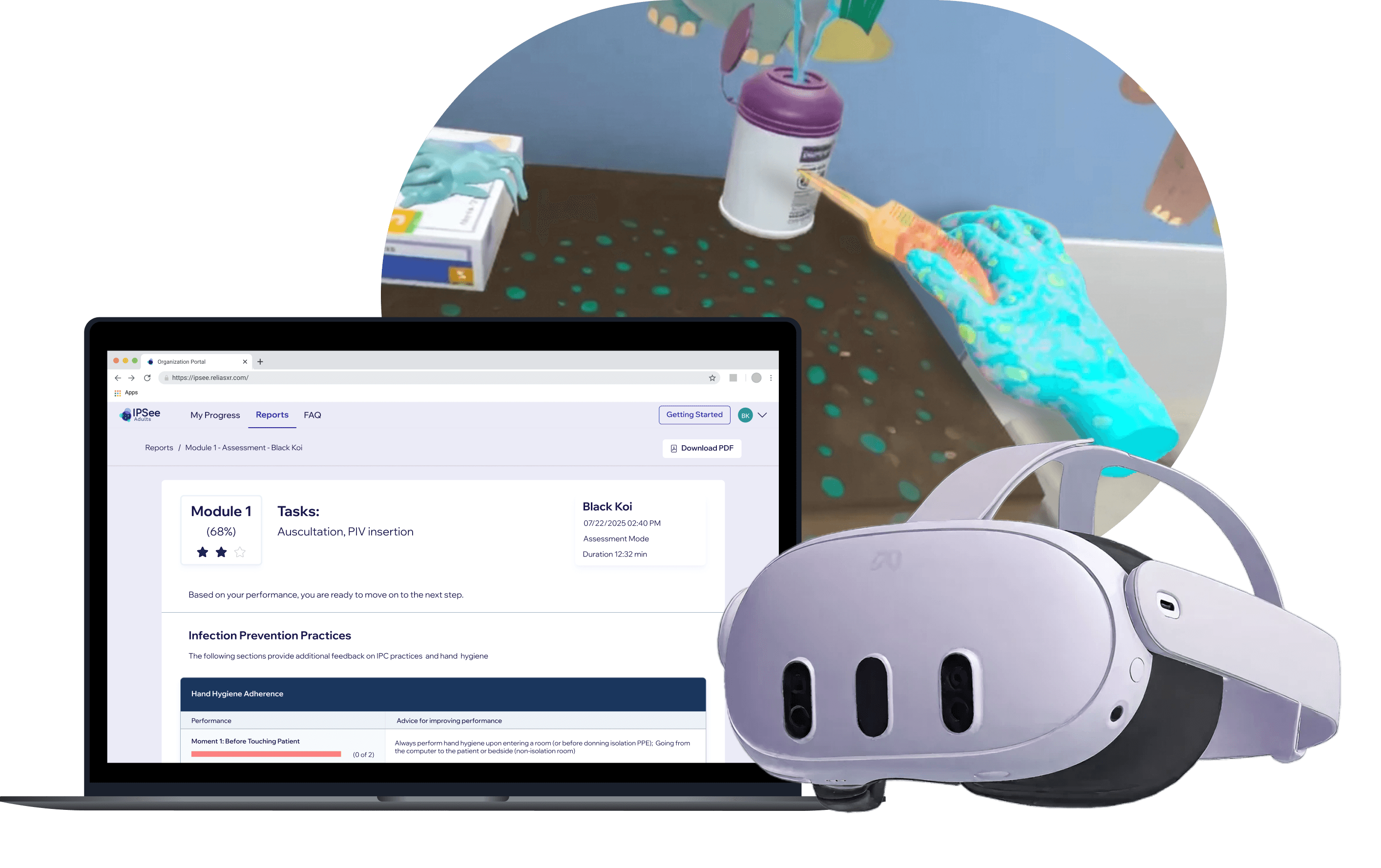
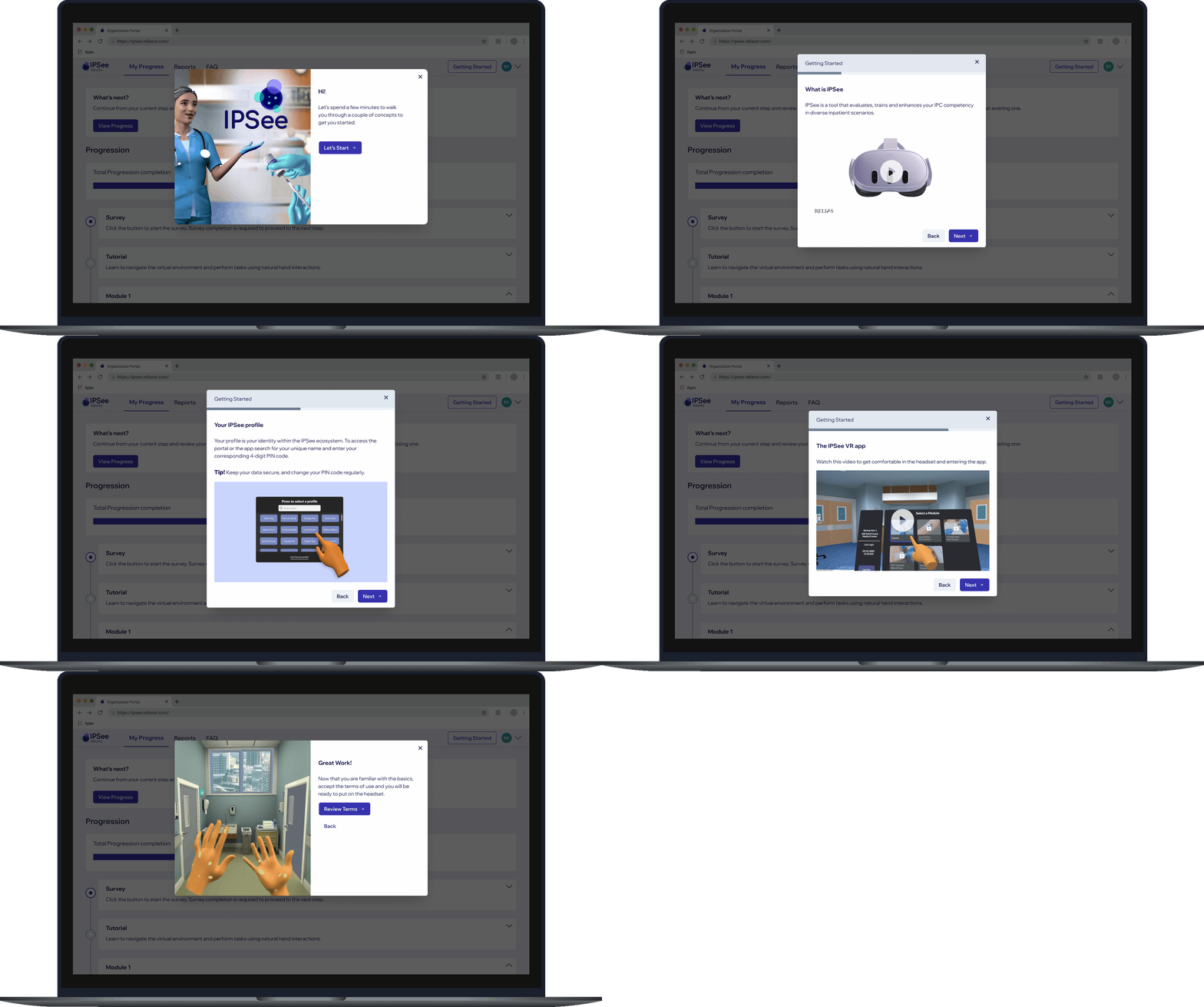
The web portal provides a clear and secure entry into the system. Access is protected through anonymized user profiles aligned with healthcare privacy requirements.


This onboarding stage sets expectations, clarifies goals, and connects the simulation to a broader learning journey.

By structuring the entry point, the product creates continuity between the portal and the simulation without adding complexity to the flow.

Personal Progress

Personal Progress

Users can track progress and gain insights through detailed performance reports.

Users can track progress and gain insights through detailed performance reports.

App screens
App screens

Organizational Visibility

Organizational Visibility

Admins gain actionable insights into usage and performance, helping reveal potential gaps in protocol adherence across the organization.

Admins gain actionable insights into usage and performance, helping reveal potential gaps in protocol adherence across the organization.

App screens
App screens

Pilot Validation

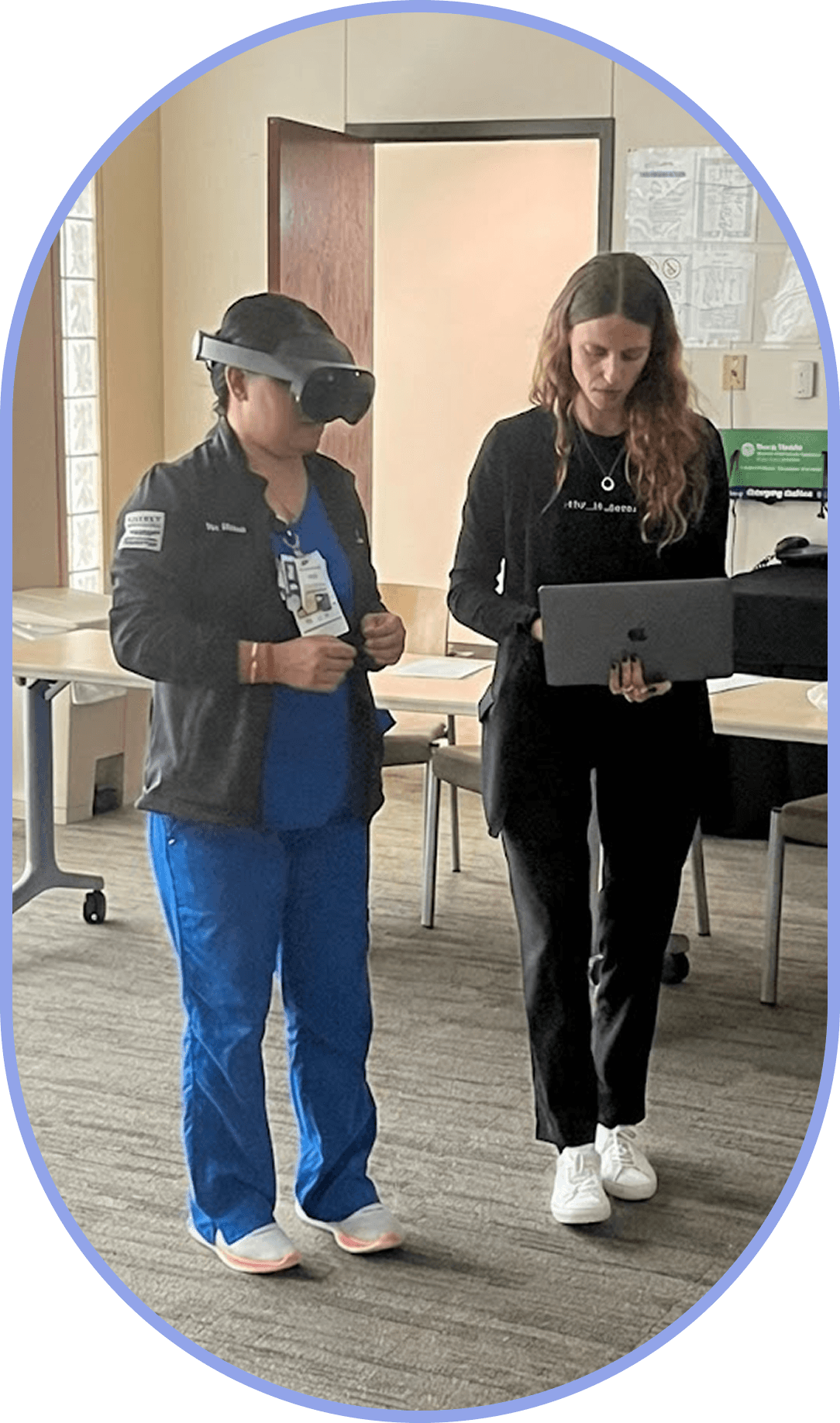
The pilot aimed to validate usability, behavioral change, and learning outcomes in real clinical settings.

250 Nurses

Including nurse managers, across four hospital sites in the U.S.

Assessments

Focused on navigation, interaction, task completion, feedback, and correct behavior.
results

results

11%

increase in confidence during infection prevention decision making.

11%

increase in confidence during infection prevention decision making.

68%

improvement in hand hygiene adherence through repeated practice.

68%

improvement in hand hygiene adherence through repeated practice.

95%

satisfaction rate with the training experience.

95%

satisfaction rate with the training experience.

Product Impact Today

Product Impact Today

The product is currently deployed across U.S. hospital systems and continues to expand within healthcare organizations.

It supports infection prevention training and assessment through measurable behavioral outcomes and scalable implementation in real clinical environments.
Contact me

|

Messerromi@gmail.com

|

|

Contact me

|

Messerromi@gmail.com

|

|

Contact me

Messerromi@gmail.com