As Lead Product Designer, I led UX/UI and content interaction design through the product’s transition from B2C to B2B2C.
I owned discovery and interactive reading flows, building the foundation for content growth and organizational expansion.
I led a team of three designers, mentored additional designers and interns, reported to the VP of Product, and partnered closely with engineering, technical artists, and marketing.
BACKGROUND
Traditional reading struggles to compete with digital media, reducing children’s engagement and independent reading while leaving parents without a “meaningful screen time” option.
Children (age 3-9)
Parents
Low engagement with static content
Difficulty reading independently
Need for intuitive interaction
Lack of meaningful screen time
Hard to motivate reading habits
Need for safe, solo learning
Product Overview
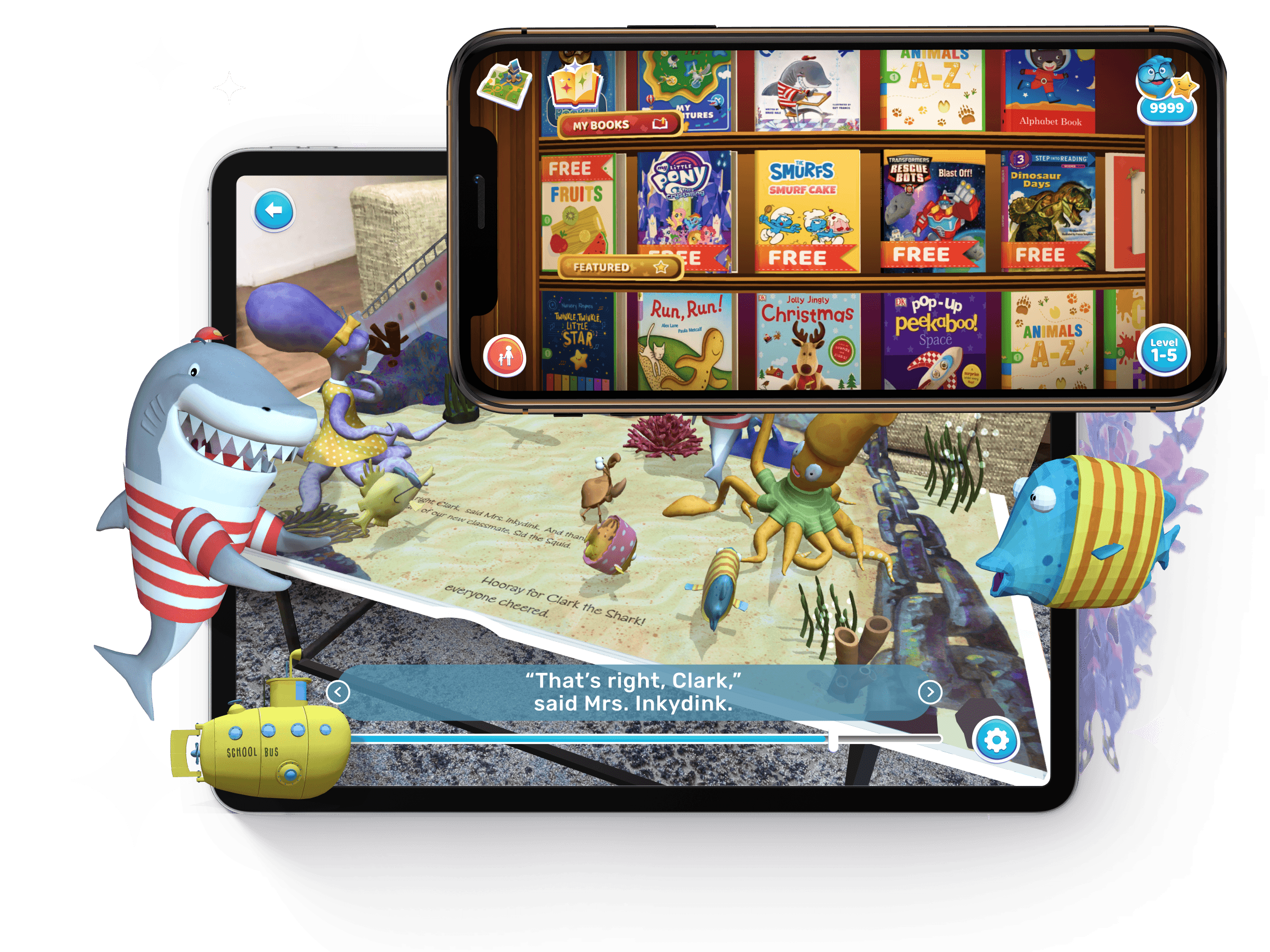
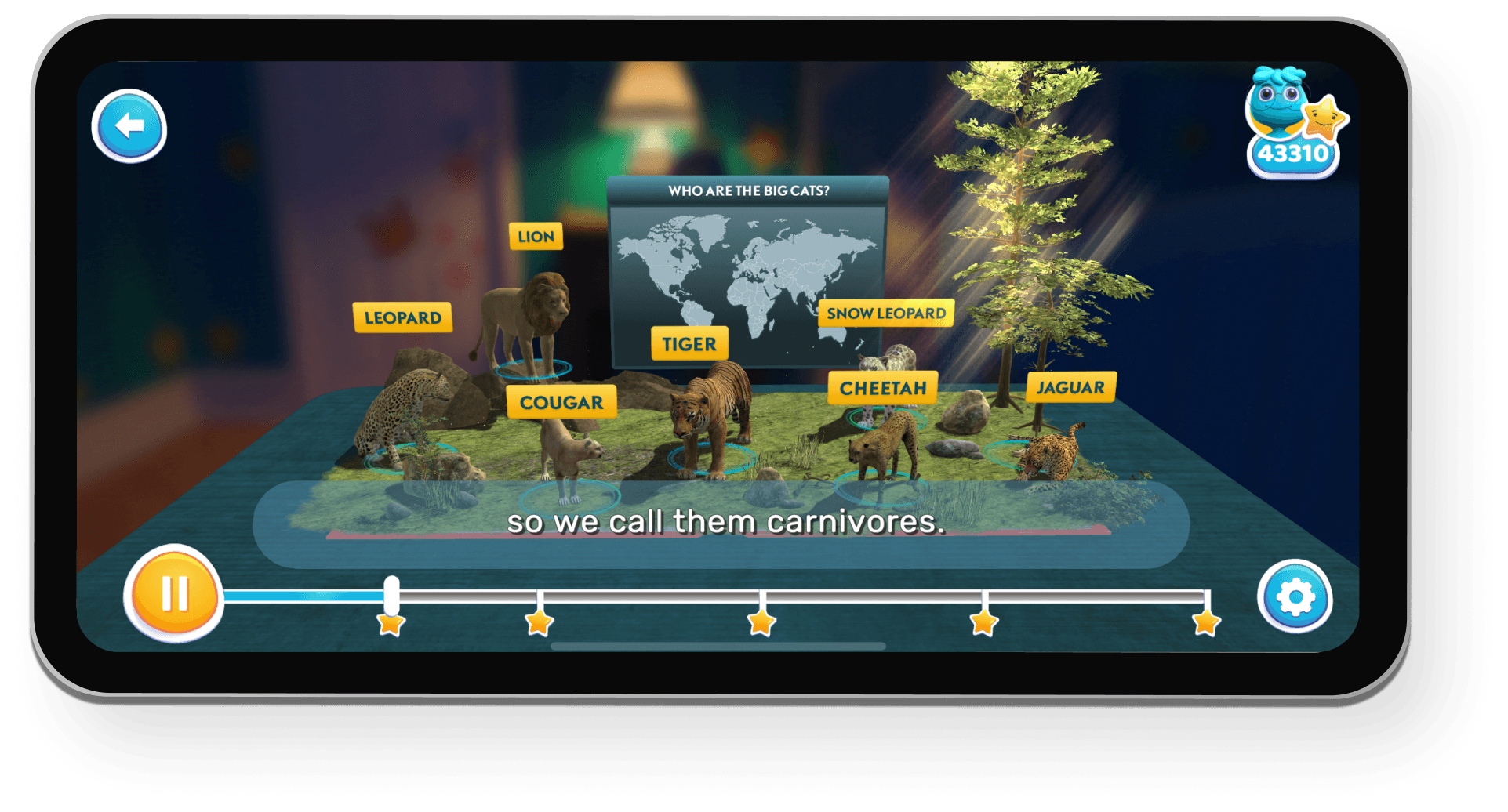
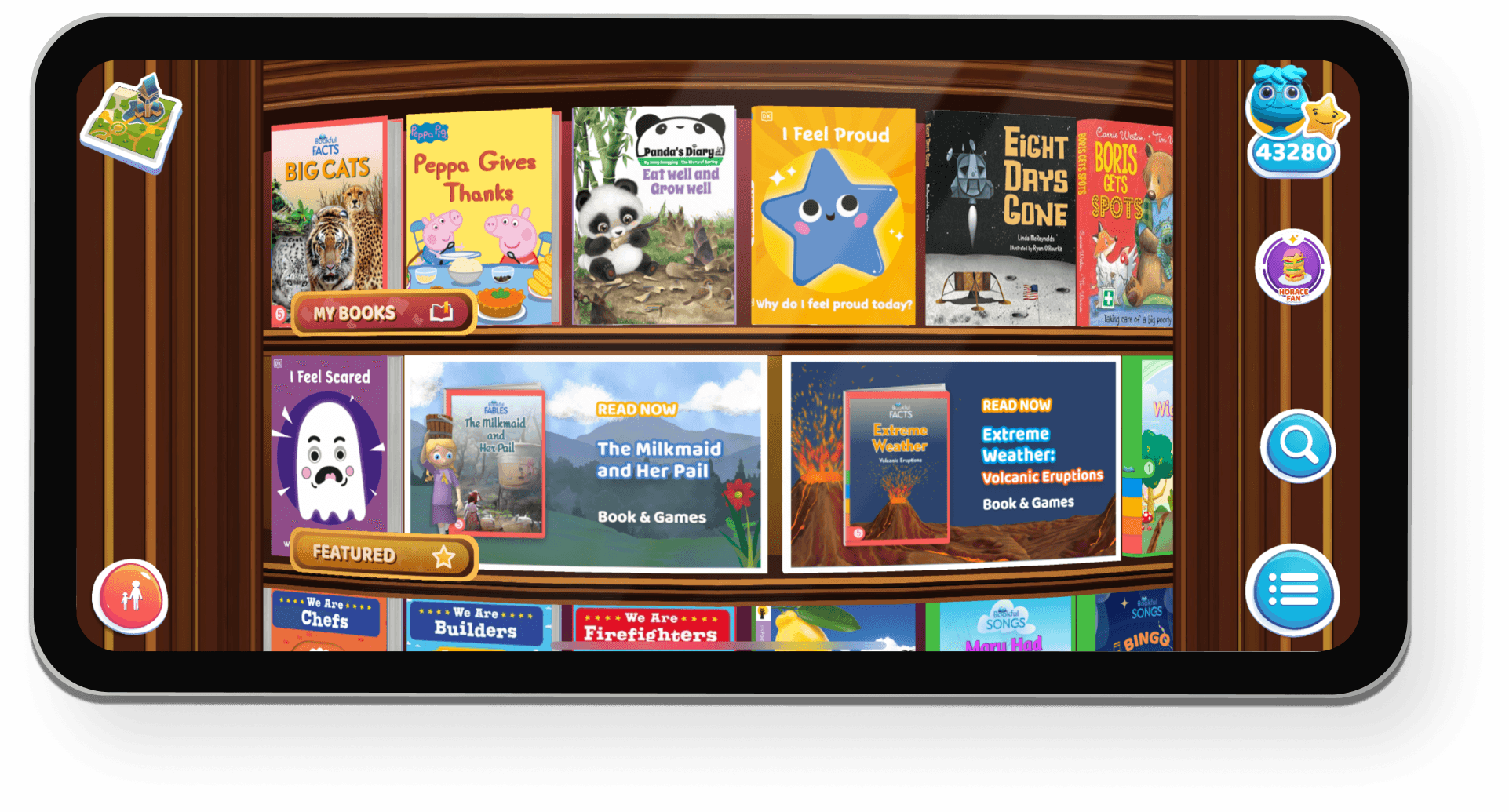
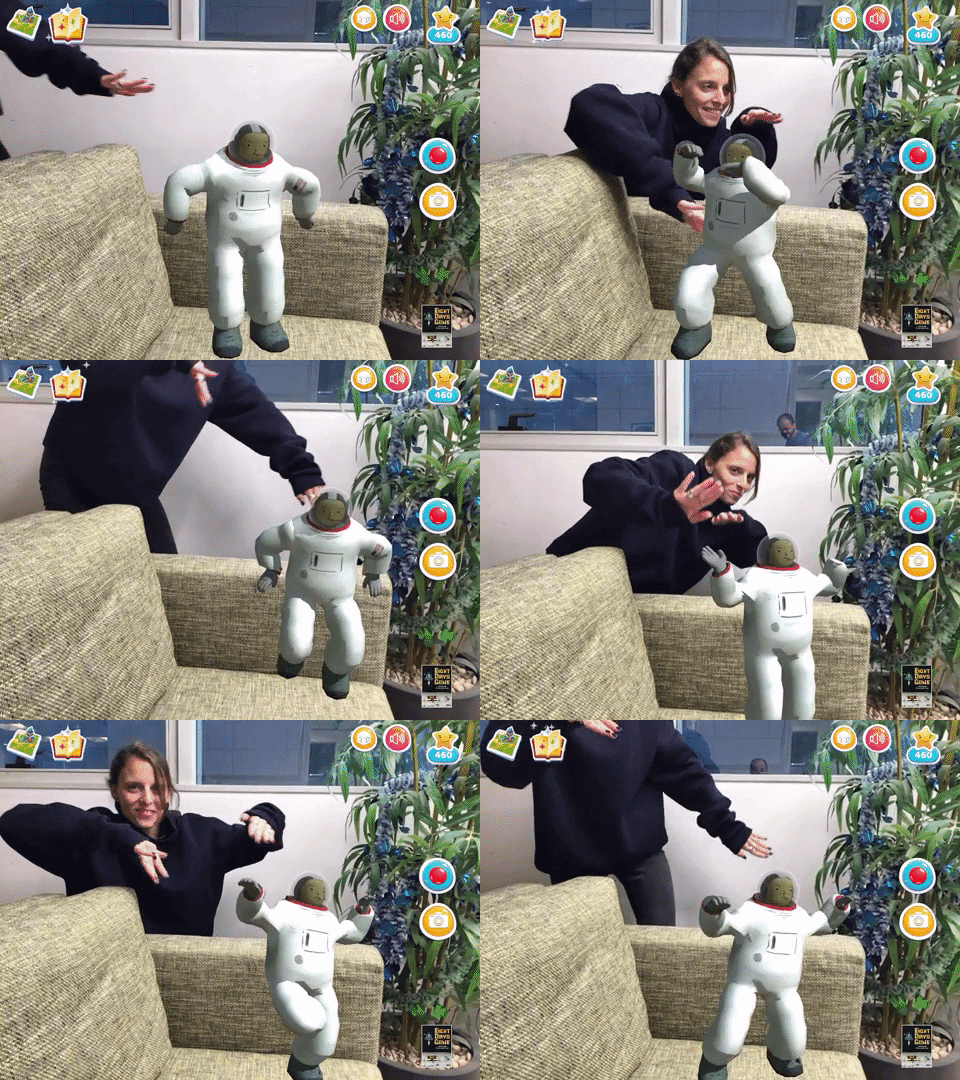
Books were brought to life through animation, with story driven activities and games that support early reading while enabling confident, parent approved independent use.

Design for scale
As content scaled rapidly, I defined and rolled out a design to production pipeline used across the design team.
This included establishing smart components and reusable flows to full app and content localization.
I led hands-on collaboration with technical artists and engineering to reduce implementation effort.
This work led to a ~70% increase in production efficiency
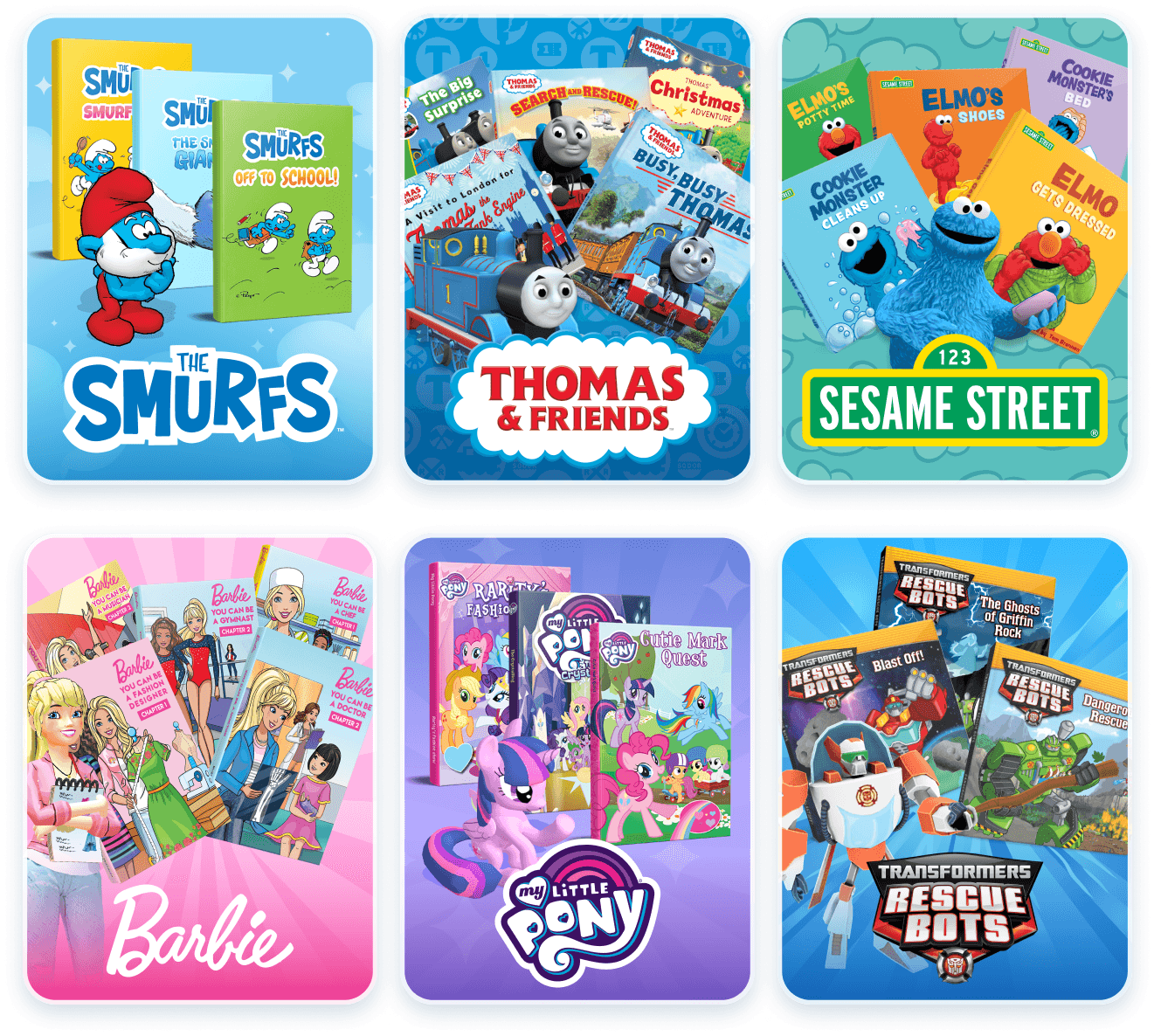
The business goal was clear: expand the content library to strengthen the product’s value and leverage partnerships. As the catalog grew, however, the browsing experience became more complex.
Insights from parent interviews highlighted difficulty finding specific content within the library. Product analytics reinforced this pattern, showing a significant increase in scrolling before users selected content.
Engagement with individual books remained strong, but discoverability did not scale at the same pace.

The library previously relied on endless browsing. I introduced a structured search experience to support scalable discovery and reduce friction.
Users could filter by reading level, interests, and language, or search directly by title or author.
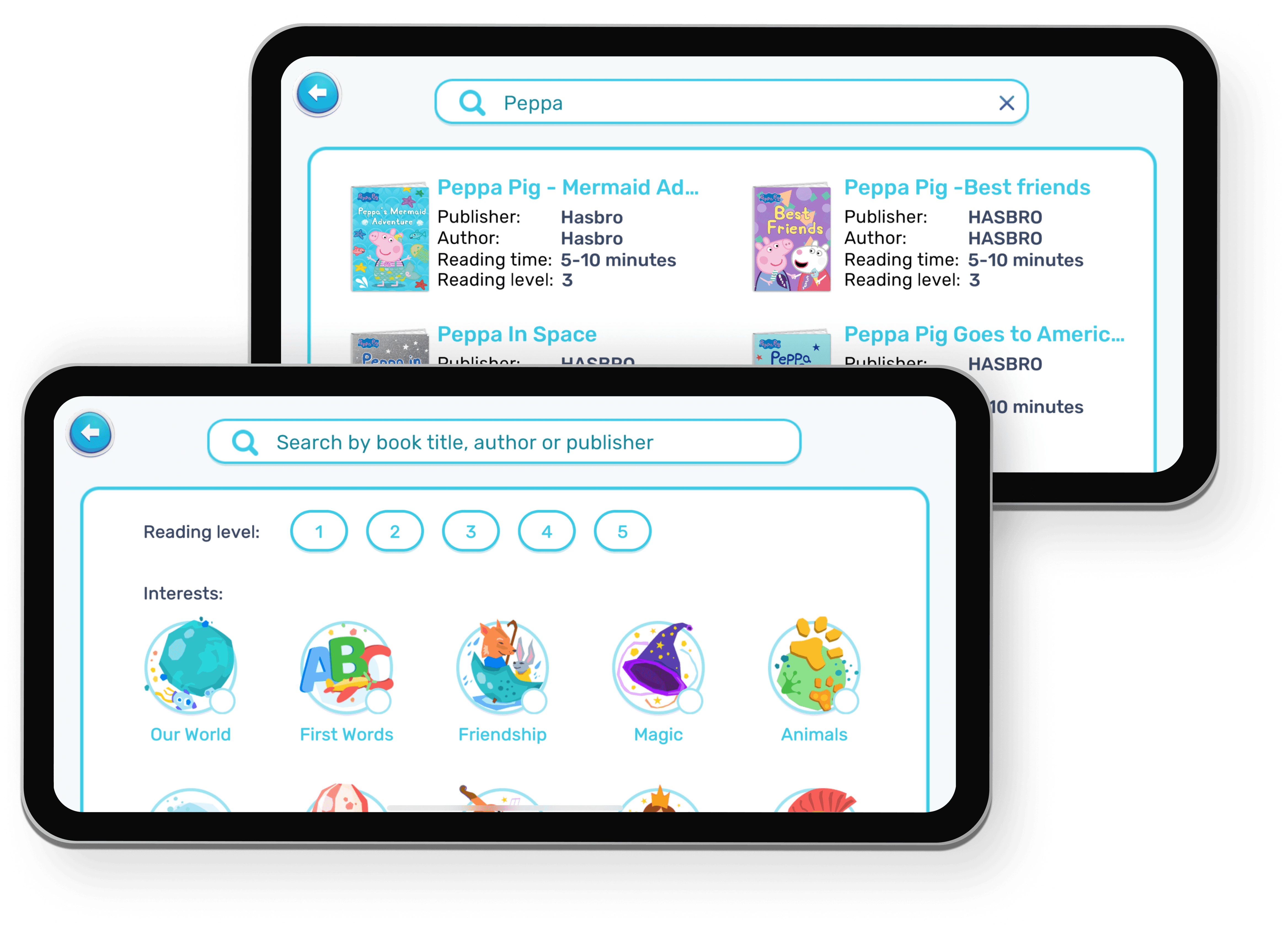
The search entry point was positioned on the right side, aligning with the app’s existing filter logic to maintain consistency and reduce cognitive load.
To ensure adoption, the feature was integrated naturally into onboarding for new users. For existing users, the search button appeared with a subtle scale animation until first use, drawing attention without disrupting the experience.
Post-completion analytics showed that many sessions ended after a single activity. Users often paused at the “What’s Next?” screen, which suggested friction in transitioning to the next book.
The goal was to make it easier to move from one activity to the next without interrupting momentum.
The previous design presented multiple equal options, requiring users to actively choose their next step. It also used a back button for returning to the library, which was not always clear for younger users.
I redesigned the experience to create clearer progression. The new layout centers one recommended next activity based on personalization and series continuity, while still presenting alternative suggestions.
The back button was replaced with a dedicated library icon, making navigation clearer and more explicit.
After a short countdown, the recommended activity begins automatically. Users can override this at any time by selecting another suggestion or returning to the library.
Post-launch analytics showed improved continuation between activities, with fewer sessions ending immediately after completion.
In parallel, I contributed to simplifying onboarding flows to support faster signup. We ran A/B tests on subscription pages to optimize different offers and campaigns.
As part of the platform’s expansion, we began exploring a web-based experience to publish content for schools.
Bookful challenged me to think beyond individual features and focus on how systems evolve over time. Designing for scale meant balancing business expansion with the needs of early readers.